

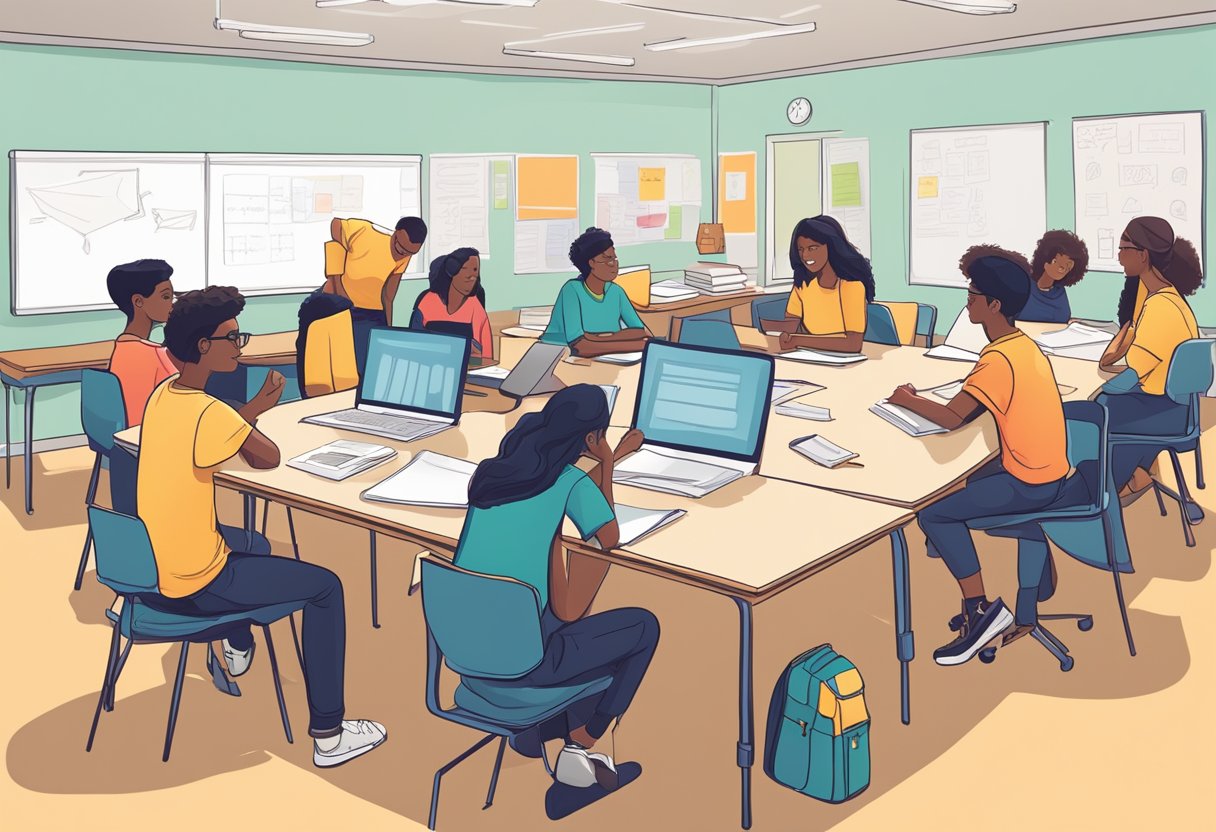
The traditional image of the college student—sequestered in a library corner with nothing but a coffee and a stack of textbooks—is rapidly becoming an artifact of the past. In 2026, the profile of the “average” student has shifted. They are no longer just scholars; they are full-time employees, entrepreneurs, parents, and digital nomads. In this high-pressure environment, a new strategy has emerged: The Delegation Dividend.
This concept, borrowed from corporate management, suggests that by outsourcing specialized or time-consuming tasks to external experts, an individual can maximize their personal ROI (Return on Investment). For the modern student, this means leveraging professional support to maintain a high GPA while focusing on the practical skills that actually lead to career advancement.
Key Takeaways
- The Rise of Academic Strategy: Students are shifting from “doing everything” to “managing everything,” treating their degree like a series of business deliverables.
- Time as a Finite Resource: With the average student working 25+ hours a week, delegating complex writing tasks is a survival mechanism, not just a luxury.
- Global Academic Mobility: The increase in international study requires localized expertise to meet specific regional grading rubrics.
- Data-Backed Performance: Statistics show that students who use professional editing and drafting services report 20% lower stress levels and higher overall career satisfaction.
The Economics of Education: Why We Delegate
In economics, “Opportunity Cost” refers to the loss of potential gain from other alternatives when one alternative is chosen. When a student spends 40 hours researching a single 2,000-word paper, the opportunity cost is immense. That time could have been spent at a paid internship, studying for a professional certification (like a CCNA or CPA), or networking within their industry.
Recent data from the National Center for Education Statistics (NCES) and independent student surveys suggest that the academic workload has increased by nearly 15% over the last decade due to the inclusion of more technical and digital components. As a result, the “Academic Gig Economy” has stepped in to fill the gap.
For students navigating the complexities of international standards, especially those in the Commonwealth or European systems, the need for precision is paramount. Many US-based students participating in global exchange or distance learning programs often seek out assignment help uk to ensure their work meets the specific, often more rigid, UK academic formatting and linguistic standards.
The Numbers Behind the Trend
To understand why this shift is happening, we must look at the data:
- Work-Study Balance: According to a 2025 survey, 72% of graduate students are “non-traditional,” meaning they have at least one major life responsibility outside of school.
- The GPA Premium: Research indicates that in fields like Finance and Engineering, a GPA difference of 0.5 points can result in a $10,000–$15,000 difference in starting salary.
- Mental Health Crisis: A study by the American Psychological Association (APA) found that academic stress is the #1 cause of anxiety among young adults.
When you look at these numbers, the decision to pay someone to do assignment tasks is no longer a moral question—it is a logical, data-driven response to an over-saturated schedule.
Case Study I: The Executive MBA Pivot
Subject: Jonathan, a 34-year-old Marketing Director in Chicago. The Challenge: Jonathan was enrolled in an Executive MBA program to move into a C-suite role. During his finals week, his company underwent an unexpected merger, requiring him to work 14-hour days. He had a 5,000-word thesis due on “Supply Chain Logistics”—a topic he understood conceptually but didn’t have the time to research at an academic level.
The Strategy: Jonathan hired a professional academic consultant to handle the literature review and data synthesis portion of his thesis. The Execution: He provided the consultant with his core arguments and company data. The consultant then formatted this into a formal academic paper, ensuring all citations met the APA 7th edition standards. The Dividend: Jonathan focused on the merger, which resulted in a promotion three months later. He reviewed the drafted thesis, added his personal insights, and submitted it. He graduated with honors, effectively “buying back” 50 hours of his life at a critical career juncture.
Case Study II: The International Bridge
Subject: Maria, a US-based student pursuing a Master’s in International Law through a UK university. The Challenge: Maria was a brilliant legal thinker, but she consistently lost points on her “Law of Tort” assignments because she used US legal terminology and Bluebook citations instead of the UK’s OSCOLA system and British English conventions. The Strategy: Maria began using localized experts to review and edit her drafts. The Result: By bridging the gap with assignment help uk, her grades jumped from “Pass” to “Distinction.” The expert editors didn’t just fix her typos; they translated her US-centric legal arguments into a format that the UK examiners expected.
The “Quality Gap” in Modern Universities
One of the biggest drivers of the delegation trend is the widening gap between what universities assign and what they teach. Many professors expect professional-level data visualization, complex statistical analysis, and flawless syntax, but the curriculum often focuses only on theory.
This leaves students in a lurch. To produce a “First Class” or “A+” paper, students often need tools and skills they haven’t been taught yet. Professional academic services act as a “shadow faculty,” providing the practical templates and high-quality drafts that students can use as a roadmap for their own learning.
The Ethical Reframe: Collaboration vs. Cheating
The critics of academic outsourcing often use the word “cheating.” However, in the professional world, this is simply called Collaborative Drafting. When a CEO gives a speech, a speechwriter wrote it. When a lawyer files a brief, a paralegal did the research.
By choosing to pay someone to do assignment work, students are practicing the very skill they will need in the corporate world: Vendor Management. They are learning how to:
- Set clear project requirements.
- Manage deadlines with an external provider.
- Perform quality control on a delivered product.
- Integrate external data into their own final output.
Strategic Tips for Effective Delegation
If you are looking to maximize your “Delegation Dividend,” you must be strategic about how you use these services:
- Front-Load the Requirements: Don’t just say “write my paper.” Provide your syllabus, the grading rubric, and any specific notes your professor has given in class.
- Use it as a Study Tool: Don’t just submit the work. Read the professional draft to see how the expert structured the argument. This is the fastest way to improve your own writing skills.
- Check for Regional Context: If you are a US student studying a UK curriculum, ensure your service provider understands the difference between a “2:1” and a “3.5 GPA.”
Conclusion: The Future of the Academic Hustle
As we move toward the late 2020s, the “sink or swim” mentality of higher education is being replaced by a more nuanced, resourceful approach. The students who succeed are not necessarily the ones who stayed up the latest; they are the ones who managed their resources the most effectively.
The “Delegation Dividend” is real. It is a measurable benefit in terms of time saved, stress reduced, and grades improved. Whether you are seeking assignment help uk to navigate a foreign grading system or looking to pay someone to do assignment tasks so you can focus on your career, you are participating in a global shift toward efficiency. In the end, your degree is a credential, but your time is your life. Smart students protect both.
Frequently Asked Questions (FAQs)
Q1: Is it legal to use academic assistance services in the US?
Yes. These services provide “model papers,” editing, and research assistance, which are entirely legal. They are intended to be used as a study aid and a guide for students to create their own original work.
Q2: How do I know if a service is high quality?
Look for services that offer subject-specific experts. A general writer cannot write a high-level nursing paper or a complex legal brief. Always check for reviews and ask for samples of previous work in your specific field.
Q3: How much does it typically cost to delegate an assignment?
Costs vary based on the deadline and complexity. However, when compared to the cost of retaking a college course (which can be $2,000–$5,000 in the US), paying for professional assistance is often a very high-ROI investment.
Q4: Will I get caught by AI detectors?
Reputable services employ human experts who write from scratch. Unlike ChatGPT or other AI tools, human experts provide nuanced, cited, and factually accurate research that bypasses the “robotic” patterns detected by AI software.
Q5: Can these services help with specific formatting like OSCOLA or Bluebook?
Yes. One of the main reasons students use assignment help uk is for technical formatting. Professional writers stay updated on the latest citation manuals (APA, MLA, Harvard, OSCOLA) to ensure students don’t lose points on technicalities.
About the Author:
I am a senior education consultant and career strategist with over a decade of experience helping students navigate the intersection of academia and professional growth. My work focuses on productivity hacks and the “smart study” movement. Having seen thousands of students struggle with burnout, I advocate for strategic delegation through platforms like MyAssignmentHelp.com to help future leaders reclaim their time and focus on what truly matters: their careers.
 Admin
Admin